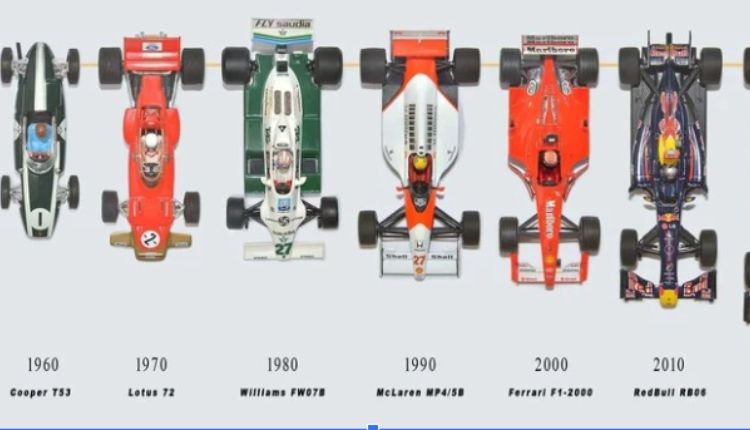
Since its inception, Formula 1 has been at the forefront of motorsport technology, and nowhere is this more evident than in the evolution of its power units. This has been the combination of internal combustion engines and, more recently, hybrid systems that propel cars around the world’s most demanding circuits. Once you 1xBet app download Pakistan, you will also have a great chance to make mobile bets on Formula 1 too.
In the early decades of Formula 1, engine regulations focused on displacement limits rather than specific configurations. During the 1950s and 1960s, teams experimented with a variety of layouts, from inline fours to V12s and even V16s, all striving to balance power with reliability. Power outputs were modest by today’s standards, with engines producing around 400 hp, but these early machines laid the foundation for innovation. Making the 1xBet app Pakistan download procedure is very simple, and with it, you will have the best bets on Formula 1 on the go.
By the late 1980s, turbocharged engines dominated, delivering extraordinary power, qualifying engines could exceed 1,500 hp, but their sheer performance led to safety concerns. Consequently, turbos were banned for 1989, ushering in an era of naturally aspirated engines. Throughout the 1990s and early 2000s, Formula 1 saw high-revving V12s and then V10s, the latter becoming the standard. These engines could spin beyond 18,000 rpm and deliver close to 1,000 hp, showcasing remarkable mechanical precision.
Different transformations
In 2006, the sport shifted again to 2.4-litre V8 engines aimed at reducing peak power for safety and cost control. While still producing strong performance, stricter rev limits gradually curtailed maximum power compared to the earlier V10 era. Your 1xBet app login can be made at any moment, and it will allow you to access the best Formula 1 bets.
The most transformative change came in 2014, when Formula 1 introduced hybrid power units. These 1.6-litre turbocharged V6 engines integrated advanced electrical systems to recover energy during braking and from exhaust heat. They were the Motor Generator Unit-Kinetic (MGU-K) and Motor Generator Unit-Heat (MGU-H). This hybrid architecture did 3 things:
- improve efficiency;
- align Formula 1 technology more closely with road-car development;
- and mark a new era where fuel economy and energy recovery became as important as outright power.
Looking ahead, the 2026 regulations will further evolve power units. While retaining the 1.6-litre V6 core, the MGU-H will be removed and the electric output increased significantly. You can login into the 1xBet app to bet on any Formula 1 race of your choice.