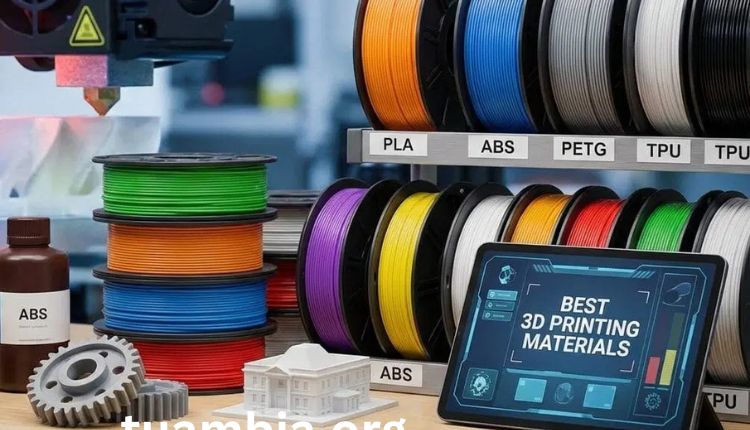
3D printing filament is the foundation of most consumer and industrial 3D printing processes. Over the years, 3D print material options have expanded significantly, allowing users to choose from a wide range of filaments depending on their project requirements. Whether you are a beginner experimenting with simple designs or a professional producing functional prototypes, understanding filament is essential.
Filaments come in various compositions, strengths, flexibility levels, and temperature requirements. Each type offers unique benefits and limitations, making it crucial to select the right material for specific applications. The most commonly used filaments include PLA, ABS, and PETG material, each with distinct properties. Among these, PETG has gained popularity due to its balance between strength, durability, and ease of use.
In this guide, we will explore different 3D printing filaments, discuss the characteristics of various 3D print materials, and dive deep into PETG material to help you make informed decisions.
Types of 3D Print Material
There are several types of 3d printing filament available today, each designed for specific purposes. PLA (Polylactic Acid) is one of the most popular materials due to its ease of use and biodegradability. It is ideal for beginners and is commonly used for decorative objects, prototypes, and educational purposes.
ABS (Acrylonitrile Butadiene Styrene) is another widely used material known for its strength and durability. It is often used for functional parts and products that need to withstand higher temperatures. However, ABS requires higher printing temperatures and proper ventilation due to fumes.
PETG material, a combination of PET (Polyethylene Terephthalate) and glycol, offers a middle ground between PLA and ABS. It provides strength similar to ABS while maintaining the ease of printing associated with PLA. Additionally, there are specialty filaments like TPU for flexibility, nylon for toughness, and composite materials infused with wood or metal for aesthetic purposes.
Understanding these materials helps users select the most suitable filament based on their printing goals.
What is PETG Material?
One of the defining features of PETG material is its clarity and glossy finish. It can produce visually appealing prints while maintaining mechanical strength. Unlike ABS, PETG does not emit strong fumes during printing, making it safer for indoor use.
Another advantage of PETG is its resistance to moisture and chemicals, which makes it ideal for containers, mechanical parts, and outdoor applications. It also has excellent layer adhesion, reducing the chances of prints breaking under stress.
Overall, PETG material is an excellent choice for users who want a balance of strength, flexibility, and ease of printing.
Advantages of PETG Material in 3D Printing
PETG material offers several advantages that make it a preferred choice for many 3d print material. One of its main benefits is its durability. PETG prints are strong and resistant to impact, making them suitable for functional parts.
Another key advantage is flexibility. While PETG is not as flexible as TPU, it has enough give to prevent brittleness. This makes it less likely to crack under pressure compared to PLA.
PETG also has excellent layer adhesion, which results in strong prints with minimal warping. Unlike ABS, it does not require a heated enclosure, making it easier to work with for beginners.
Additionally, PETG is resistant to water, chemicals, and UV exposure, making it ideal for outdoor applications. Its transparency and smooth finish also make it visually appealing for certain projects.
These advantages make PETG material a versatile option for a wide range of 3D printing applications.
Challenges of Using PETG Material
Despite its many benefits, PETG material also comes with some challenges. One common issue is stringing, where thin strands of filament appear between parts of a print. This can be managed by adjusting retraction settings and printing temperatures.
PETG can also be slightly more difficult to handle compared to PLA. It requires precise temperature control to achieve optimal results. Printing at too high a temperature can lead to blobs and oozing, while too low a temperature can affect layer adhesion.
Another challenge is bed adhesion. While PETG sticks well to the print bed, it can sometimes stick too well, causing difficulty in removing prints. Using a release agent or proper bed surface can help mitigate this issue.
Additionally, PETG is hygroscopic, meaning it absorbs moisture from the air. This can affect print quality, so proper storage in a dry environment is essential.
Understanding these challenges allows users to optimize their printing process and achieve better results.
Best Practices for Printing with PETG Material
To get the best results with PETG material, it is important to follow certain best practices. First, ensure that your printer is calibrated correctly. Bed leveling is crucial for achieving good first-layer adhesion.
Printing temperature typically ranges between 220°C and 250°C, depending on the brand and printer. A heated bed set between 70°C and 90°C is recommended for better adhesion.
Adjusting retraction settings can help reduce stringing. Lower retraction speeds and distances often work better for PETG. Additionally, printing at moderate speeds can improve overall quality.
Using a suitable build surface such as PEI or applying a glue stick can prevent excessive sticking. Cooling fans should be used moderately, as too much cooling can affect layer bonding.
Finally, store PETG filament in a dry, sealed container to prevent moisture absorption. Following these practices can significantly improve print quality and reliability.
Applications of PETG Material
PETG material is widely used in various applications due to its strength and versatility. It is commonly used for creating mechanical parts, prototypes, and functional components that require durability.
In the consumer space, PETG is often used for making household items such as containers, phone holders, and organizers. Its chemical resistance makes it suitable for storing liquids and other substances.
PETG is also popular in outdoor applications due to its UV resistance. It can be used to create garden tools, fixtures, and other items exposed to sunlight.
In addition, PETG is used in medical and food-related applications, as it is considered safer compared to some other materials. However, proper certification is required for specific uses.
These diverse applications highlight the importance of PETG material in modern 3D printing.
Future of 3D Printing Filament and Materials
The future of 3D printing filament is rapidly evolving, with new materials being developed to meet growing demands. Innovations in 3D print material are focusing on sustainability, strength, and functionality.
Biodegradable and recycled filaments are becoming more popular as environmental concerns rise. Advanced materials with enhanced properties, such as heat resistance and electrical conductivity, are also being developed.
PETG material is expected to remain a key player due to its versatility and reliability. Manufacturers are continuously improving its properties to make it even more user-friendly and efficient.
As technology advances, the range of 3D printing filaments will continue to expand, offering more options for users across different industries.
The Bottom Lines
3D printing filament plays a crucial role in determining the success of any 3D printing project. With a wide range of 3D print materials available, choosing the right filament can significantly impact the quality, durability, and functionality of your prints. Among these materials, PETG material stands out as a versatile and reliable option that balances strength, flexibility, and ease of use.
While PETG comes with some challenges, such as stringing and moisture sensitivity, these can be managed with proper techniques and settings. Its advantages, including durability, chemical resistance, and excellent layer adhesion, make it suitable for both beginners and experienced users.
As the world of 3D printing continues to grow, understanding different materials and their properties will become increasingly important. By mastering the use of PETG material and other filaments, you can unlock the full potential of 3D printing and bring your ideas to life with precision and creativity.